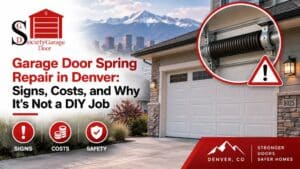
Recognizing spring problems early prevents dangerous failures and costly secondary damage.
Garage Door Myths Debunked: Separating Fact from Fiction in Denver
Why Garage Door Myths Persist and Why They Matter
Garage door myths spread through well-intentioned advice from neighbors, outdated information online, and misunderstandings about how modern systems work. In Denver’s unique climate, these myths can lead to costly mistakes, safety hazards, and missed opportunities for improving home performance and value.
Society Garage Door has served homeowners throughout Aurora, Lakewood, and the Denver metro area for over a decade. We’ve encountered every myth imaginable and seen the real-world consequences when homeowners make decisions based on misinformation rather than facts.
Debunking these myths with evidence-based information helps homeowners make informed decisions about maintenance, repairs, and upgrades. Understanding the truth behind common misconceptions can save money, prevent safety issues, and ensure optimal garage door performance in Colorado’s challenging conditions.
Safety and Maintenance Myths
Myth #1: “All Garage Door Springs Are the Same”
Spring selection impacts both safety and economics significantly. Standard springs typically last 10,000 cycles (about 7-10 years of normal use), while high-cycle springs are rated for 25,000-50,000 cycles. In Denver’s climate, where temperature cycling stresses metal components, quality springs provide even greater relative benefits.
Professional installation ensures proper tension, alignment, and safety procedures that maximize spring performance while protecting homeowner safety. Recognizing spring problems early prevents dangerous failures and costly secondary damage.
Myth #2: “Garage Door Maintenance Is Just a Money Grab”
Garage doors operate under significant mechanical stress with springs under 150-300 pounds of tension, complex safety systems, and precise adjustments required for safe operation. While homeowners can perform basic maintenance, professional service addresses safety-critical adjustments and potential problems.
Maintenance Economics:
- Annual professional maintenance: $100-150
- Average emergency repair: $300-600
- Spring failure with secondary damage: $500-1,200
- Preventive maintenance ROI: 300-400% through avoided emergencies
Professional maintenance includes safety system testing, component inspection, proper lubrication, and adjustments that prevent the majority of emergency service calls. This proactive approach saves money while ensuring family safety.
DIY and Repair Myths
Myth #3: “Garage Door Repair Is Always a Simple DIY Project”
Garage door systems include components under extreme tension that can cause serious injury or death if mishandled. Springs, cables, and high-tension hardware require specialized tools and training for safe service. Even seemingly simple adjustments can create dangerous situations if performed incorrectly.
Common DIY mistakes often create more problems than they solve, leading to expensive repairs, safety hazards, and voided warranties. Understanding your limitations protects both safety and financial interests.
Myth #4: “The Cheapest Repair Quote Is Always the Best Deal”
Quality repairs use appropriate parts, follow safety procedures, and include comprehensive system testing to ensure reliable operation. Low-cost providers often cut corners on parts quality, skip safety checks, or fail to address underlying problems that cause premature failures.
True Cost Analysis:
- Cheap spring replacement: $150-200 (fails in 2-3 years)
- Quality spring replacement: $250-350 (lasts 10+ years)
- Total 10-year cost of cheap option: $600-900
- Total 10-year cost of quality option: $250-350
Understanding repair costs helps homeowners evaluate quotes based on long-term value rather than just initial price. Quality repairs with proper warranties provide better financial outcomes over time.
Performance and Technology Myths
Myth #5: “Insulated Garage Doors Don’t Make a Difference in Colorado”
Denver’s dramatic temperature swings and intense UV exposure make insulation particularly valuable. Properly insulated doors can reduce energy costs by 10-20% for attached garages while providing more stable temperatures for stored equipment and vehicles.
Denver Insulation Benefits:
- Reduced energy transfer between garage and living spaces
- Protection from UV damage at 5,280 feet elevation
- More stable temperatures during 40+ degree daily swings
- Better door structural integrity and longevity
- Quieter operation due to additional mass and damping
Insulation benefits extend beyond energy savings to include equipment protection, reduced door maintenance needs, and improved durability in Colorado’s challenging climate conditions.
Myth #6: “Smart Garage Door Openers Are Just Expensive Gadgets”
Smart garage door systems offer practical benefits including remote monitoring during travel, automatic alerts for unusual activity, and diagnostic information that prevents unexpected failures. These features are particularly valuable for Denver homeowners dealing with severe weather events and temperature extremes.
Modern opener technology includes advanced safety features, energy efficiency improvements, and diagnostic capabilities that justify the modest additional investment for most homeowners.
Installation and Replacement Myths
Myth #7: “Any Door Can Be Installed in Any Opening”
Garage door installation involves precise measurements, structural load calculations, and compatibility assessment between doors, openers, and existing construction. Older Denver homes often present unique challenges requiring custom solutions rather than standard installations.
Installation Complexity Factors:
- Structural adequacy for door weight and opener forces
- Header height and side room requirements
- Foundation settling and soil movement effects
- Local building codes and permit requirements
- Climate-specific hardware and sealing needs
Professional installation ensures proper fit, safety compliance, and optimal performance while addressing site-specific challenges that affect long-term reliability and homeowner satisfaction.
Myth #8: “Garage Door Replacement Is Always Better Than Repair”
Doors less than 10 years old with single-component failures often benefit from professional repairs rather than complete replacement. However, multiple simultaneous problems, structural damage, or obsolete systems may justify replacement for better long-term value.
Decision Guidelines:
- Repair when: Single component failure, door under 10 years old, structural integrity intact
- Replace when: Multiple problems, door over 15 years old, major structural damage, safety system inadequacies
- Consider homeowner goals: Energy efficiency, curb appeal, smart features, warranty coverage
Professional assessment provides objective evaluation of repair versus replacement options, helping homeowners make decisions based on their specific situations and long-term objectives.
Troubleshooting and Problem-Solving Myths
Myth #9: “Garage Door Problems Always Have Obvious Causes”
Modern garage door systems include mechanical, electrical, and electronic components that interact in complex ways. Symptoms like slow operation, unusual noises, or intermittent failures can result from various causes requiring systematic troubleshooting to identify correctly.
Effective troubleshooting requires understanding system interactions, specialized diagnostic equipment, and experience with various problem patterns. Professional diagnosis ensures problems are addressed comprehensively rather than symptomatically.
Myth #10: “All Garage Door Companies Provide the Same Service Quality”
Professional garage door service requires specialized knowledge of mechanical systems, electrical components, safety procedures, and local building requirements. Training, experience, and company standards create significant quality differences between service providers.
Quality Indicators:
- Comprehensive system inspections beyond immediate problems
- Detailed explanations of recommended work and alternatives
- Quality parts with appropriate warranties
- Safety procedure compliance and documentation
- Follow-up support and ongoing service relationships
Society Garage Door’s commitment to professional excellence, ongoing training, and customer education demonstrates the difference that quality service makes in both immediate problem resolution and long-term system reliability.
Making Informed Decisions Based on Facts
Evaluating Information Sources
In the age of internet information, distinguishing reliable sources from myths and misinformation requires critical evaluation. Professional expertise, manufacturer specifications, and industry standards provide more reliable guidance than general online advice or anecdotal experiences.
Reliable Information Sources:
- Professional service providers with local experience
- Manufacturer technical documentation and specifications
- Industry associations and safety organizations
- Local building codes and regulatory requirements
- Professional training and certification programs
Building Long-Term Success Through Facts
Understanding garage door facts rather than relying on myths leads to better decisions, improved safety, and greater satisfaction with system performance. Professional relationships built on education and honest communication provide ongoing value through expert guidance and quality service.
Society Garage Door believes in empowering homeowners with accurate information while providing professional expertise for complex decisions and service needs. Our goal is helping Denver families achieve reliable, safe, and cost-effective garage door operation through fact-based approaches rather than myth-driven mistakes.
For homeowners, separating garage door facts from fiction is crucial. Making informed decisions is key to protecting your family, preserving your long-term investment, and ensuring reliable operation and longevity. We provide the necessary information to handle Denver’s challenging climate conditions and guarantee your door performs consistently.