Why Your Garage Door Won’t Close And How to Fix It
A garage door that won’t close is more than an inconvenience it’s a security risk, safety hazard and weather exposure issue. Whether you’re leaving for work or heading to bed, an open garage door in Denver can put your home, vehicles and belongings at risk.
If your garage door won’t close, this guide explains:
- The most common causes
- Safe troubleshooting steps
- When to call a professional
- How to prevent it from happening again
This guide is written for homeowners searching for real solutions not guesswork.
Why Your Garage Door Won’t Close?
In most cases, a garage door won’t close because of:
- Misaligned or blocked safety sensors
- Damaged sensor lenses
- Track obstruction
- Broken springs or cables
- Incorrect limit settings
- Remote or wall switch malfunction
- Opener motor failure
Let’s break each one down.
1. Misaligned or Blocked Safety Sensors
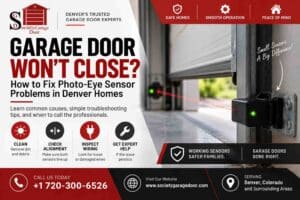
Modern garage doors use photo eye sensors located near the floor on both sides of the track. If these sensors don’t detect each other, the door won’t close.
Signs:
- Door starts closing, then reverses
- Opener lights blink
- Door only closes when holding the wall button
How to Fix:
- Remove objects blocking the sensors
- Clean lenses with a soft cloth
- Check alignment (both LED lights should be steady)
- Adjust gently until lights stop blinking
If wires are damaged or LEDs don’t light up, professional repair is recommended.
2. Damaged Tracks
Garage door tracks must remain clear and aligned.
Signs:
- Grinding noise
- Door gets stuck halfway
- Visible dents in track
How to Fix:
- Remove debris
- Tighten loose brackets
- Check for bends
Never force the door closed this can damage rollers or cables.
3. Broken Torsion or Extension Springs
Springs carry the door’s weight. If one breaks, the door may not close properly — or may slam shut.
Signs:
- Loud bang from garage
- Door feels heavy
- Door closes unevenly
Garage door springs are under extreme tension. Attempting DIY spring repair can cause serious injury. Always call a trained technician.
If you’re in Denver, this is where professional garage door repair in Denver, CO becomes essential.
4. Opener Limit Settings Are Incorrect
Garage door openers have limit settings that control how far the door travels.
If misadjusted, the opener thinks the floor is an obstacle and reverses.
How to Fix:
- Locate limit adjustment screws (usually on opener motor)
- Turn in small increments
- Test after each adjustment
Refer to your opener manual before making changes.
5. Remote or Wall Switch Issues
Sometimes the problem isn’t mechanical.
Check:
- Replace remote batteries
- Test wall switch
- Check breaker panel
- Reset opener system
If the wall button works but the remote doesn’t, reprogramming may solve it.
6. Sensor Wiring Problems
Loose, frayed, or chewed wires can interrupt signals.
In Denver homes, seasonal temperature swings sometimes cause wire contraction issues.
If you notice inconsistent operation, wiring may need professional inspection.
7. Motor or Opener Failure
If nothing happens when you press the button:
- No sound
- No light
- No movement
Your opener motor may be failing.
At this point, professional diagnosis is the safest solution.

When Should You Call a Professional?
Call a licensed technician if:
- Springs are broken
- Door is off-track
- Cables are loose
- Door is crooked
- Opener motor hums but doesn’t move
- Safety sensors won’t align
Garage doors weigh between 130–400 pounds. Improper handling can cause serious injury or property damage.
Why This Is Common in Denver, CO
Denver’s climate contributes to garage door problems:
- Temperature fluctuations affect metal components
- Snow and ice block sensors
- Wind pressure impacts door alignment
- Dust buildup interferes with tracks
Regular inspection is critical in Colorado’s variable weather conditions.
Why Choose Society Garage Door Repair in Denver, CO?
When homeowners search for garage door repair in Denver, CO, they want fast response, honest pricing, and reliable service.
Here’s why locals choose Society Garage Door Repair:
- Same-day and emergency service
- Experienced, trained technicians
- Transparent pricing
- Fully equipped service vehicles
- Local Denver-based team
- Repairs for all major brands
Whether it’s a sensor adjustment or full opener replacement, their team diagnoses the real issue — no unnecessary upsells.
Website: https://societygaragedoor.com/
If your garage door won’t close, fast action prevents bigger (and more expensive) problems.
Garage Door Won’t Close: Top Causes & Preventive Maintenance Tips
Denver’s climate contributes to garage door problems:
- Temperature fluctuations affect metal components
- Snow and ice block sensors
- Wind pressure impacts door alignment
- Dust buildup interferes with tracks
Regular inspection is critical in Colorado’s variable weather conditions.
Why Choose Society Garage Door Repair in Denver, CO?
When homeowners search for garage door repair in Denver, CO, they want fast response, honest pricing and reliable service.
Here’s why locals choose Society Garage Door Repair:
- Same-day and emergency service
- Experienced, trained technicians
- Transparent pricing
- Fully equipped service vehicles
- Local Denver-based team
- Repairs for all major brands
Whether it’s a sensor adjustment or full opener replacement, their team diagnoses the real issue no unnecessary upsells.
Website: https://societygaragedoor.com/
If your garage door won’t close, fast action prevents bigger (and more expensive) problems.
Garage Door Won’t Close: Top Causes & Preventive Maintenance Tips
To avoid future issues:
- Clean sensors monthly
- Lubricate rollers and hinges quarterly
- Inspect tracks for debris
- Test door balance annually
- Schedule professional inspection once a year
Preventive service costs far less than emergency repairs.
Frequently Asked Questions
1. Why does my garage door start to close and then reverse?
Most commonly due to misaligned or blocked safety sensors. Clean and realign them first.
2. Can I manually close my garage door if it won’t close?
Yes, by pulling the emergency release cord. However, do not attempt if springs are broken.
3. How much does garage door repair cost in Denver?
Costs vary depending on the issue. Sensor adjustments are typically minor, while spring replacement costs more. A professional inspection provides accurate pricing.
4. Is it safe to fix garage door springs myself?
No. Springs are under high tension and can cause severe injury. Always hire a professional.
5. How fast can emergency garage door repair be done in Denver?
Most professional companies offer same-day or emergency service, depending on availability.
Conclusion
If your garage door won’t close, don’t ignore it. What starts as a minor sensor issue can turn into a major repair if left untreated.
Start with basic troubleshooting:
- Check sensors
- Inspect tracks
- Test remote
- Reset opener
If the issue involves springs, cables, or motor failure — call a trusted professional.
For reliable, fast, and local service, Society Garage Door Repair provides expert garage door repair in Denver, CO with safety and quality as top priorities.
A secure garage door means a safer home.