Your garage door is one of the largest moving systems in your home, and proper balance is essential for safe and smooth operation. When a garage door becomes unbalanced, it may seem like a small inconvenience at first, but the issue can quickly lead to damaged components, opener problems, and expensive repairs.
Many homeowners notice symptoms like a door that feels heavy, closes too quickly, makes unusual noises, or struggles to stay open. These are common signs that the garage door is no longer properly balanced.
Understanding why balance problems happen and knowing when to search for reliable garage door repair near me can help prevent major system failures and keep your garage door working safely.
What Does Garage Door Balance Mean?

A balanced garage door is one that stays properly positioned during operation without putting excessive stress on the opener or other components.
Garage doors are heavy, but the spring system helps counterbalance the door’s weight. When the system is working correctly, the door can move smoothly with minimal effort.
A properly balanced garage door should:
- Open and close smoothly
- Stay in position when partially opened
- Move evenly on both sides
- Operate without excessive strain
- Work efficiently with the opener
When balance is lost, the entire garage door system must work harder.
Why Does a Garage Door Lose Balance?

Several issues can cause a garage door to become unbalanced.
1. Worn or Broken Garage Door Springs
Garage door springs carry most of the door’s weight during operation. Over time, springs lose tension due to repeated use.
Weak springs may cause:
- Heavy door movement
- Uneven opening
- Door falling quickly
- Opener strain
Since springs are under high tension, professional inspection is recommended when spring issues are suspected.
2. Damaged or Loose Cables
Garage door cables work together with springs to maintain proper movement.
Cable problems may include:
- Fraying
- Stretching
- Loose connections
- Uneven tension
A damaged cable can affect the balance of the entire garage door system.
3. Worn Rollers and Track Problems
Garage door rollers guide the door along the tracks. When rollers become damaged or tracks become misaligned, the door may move unevenly.
Common causes include:
- Dirt buildup
- Bent tracks
- Worn rollers
- Lack of maintenance
These issues can create resistance and affect balance.
4. Improper Previous Adjustments
Sometimes balance problems occur after incorrect repairs or adjustments.
Garage door systems require precise settings. Incorrect spring tension or cable adjustments can create:
- Uneven movement
- Excessive noise
- Safety concerns
- Opener problems
Professional adjustments help restore proper operation.
Signs Your Garage Door Is Out of Balance
An unbalanced garage door usually shows warning signs before a complete failure occurs.
The Door Feels Heavy
If your garage door feels unusually difficult to lift manually, the spring system may not be supporting the door correctly.
The Door Opens or Closes Unevenly
A balanced garage door should move evenly on both sides.
Warning signs include:
- One side moving faster
- Door leaning
- Uneven closing
- Shaking during operation
The Door Will Not Stay Open
During a manual test, a balanced door should remain partially open.
If the door:
- Falls closed
- Moves upward suddenly
- Cannot stay in position
it may require adjustment.
Strange Sounds During Operation
Unusual noises may indicate stress on garage door components.
Listen for:
- Grinding
- Squeaking
- Popping
- Straining sounds
These noises often indicate underlying balance problems.
How Balance Problems Affect Your Garage Door
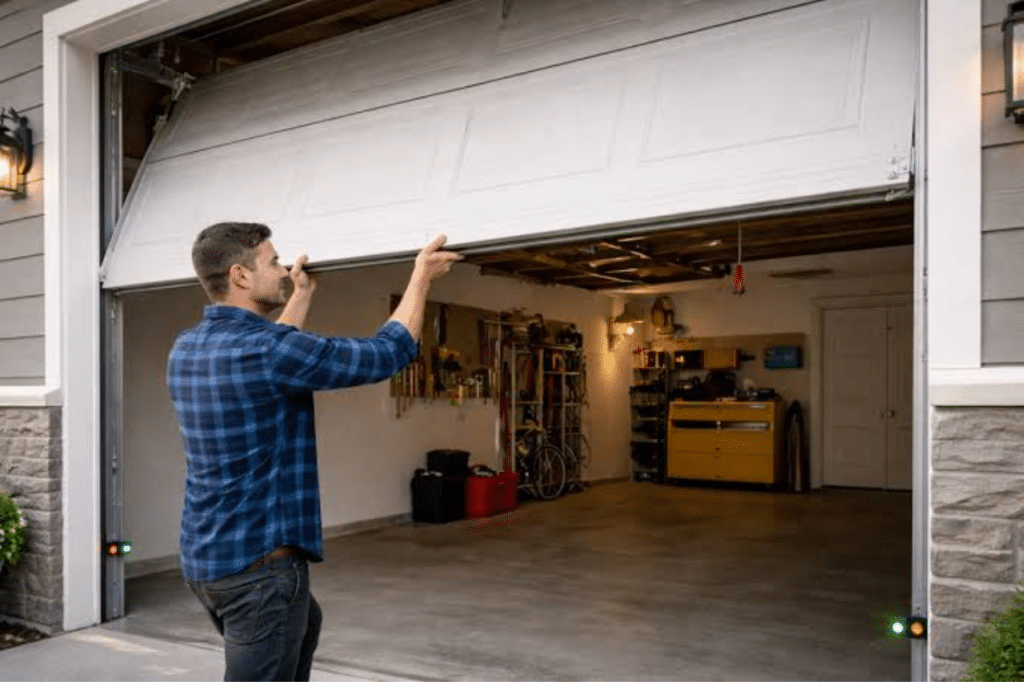
Ignoring an unbalanced garage door can create additional issues throughout the system.
Problem | Possible Result |
Weak springs | Door becomes heavy |
Poor balance | Opener works harder |
Uneven movement | Track and roller damage |
Excess strain | Faster component wear |
Incorrect adjustment | Safety concerns |
A small balance issue can eventually affect multiple parts of your garage door.
Garage Door Balance Test: A Simple Inspection
A garage door balance test helps identify whether your door is properly supported.
Professionals typically perform this test by:
- Disconnecting the opener safely.
- Manually lifting the garage door.
- Checking how the door moves.
- Observing whether it stays in position.
- Inspecting springs, cables, and other components.
If the door does not remain balanced, professional adjustment may be required.
Why Professional Balance Checks Matter
Garage door balance is not only about convenience. It affects safety, performance, and equipment lifespan.
A properly balanced garage door helps:
- Reduce opener strain
- Improve smooth operation
- Prevent unnecessary wear
- Increase component lifespan
- Improve overall safety
Professional technicians have the tools and experience needed to identify the real cause of balance problems.
How Professionals Fix an Unbalanced Garage Door

When a garage door loses balance, professionals do not simply adjust one part and assume the problem is solved. They inspect the complete system to identify the actual cause of the imbalance.
A professional technician usually follows these steps:
1. Complete System Inspection
The first step is checking the entire garage door system, including:
- Springs
- Cables
- Rollers
- Tracks
- Hinges
- Opener system
- Mounting hardware
This helps determine whether the balance issue is caused by wear, damage, or incorrect adjustment.
2. Perform a Garage Door Balance Test
A proper garage door balance test helps technicians understand how the door responds without opener assistance.
During testing, professionals check:
- How easily the door lifts manually
- Whether the door stays in place
- If one side moves differently
- Whether the spring tension is correct
The results help determine the correct repair approach.
3. Adjust Spring Tension
One of the most common solutions for balance problems is garage door adjustment.
Professionals may adjust spring tension to restore the correct balance between the door weight and spring support.
Proper adjustment helps:
- Reduce strain on the opener
- Improve door movement
- Prevent uneven operation
- Increase component lifespan
Because springs hold significant tension, adjustments should only be performed with proper tools and training.
4. Correct Cable and Track Issues
If cables or tracks are contributing to the problem, technicians may need to:
- Adjust cable tension
- Reposition misaligned tracks
- Replace damaged cables
- Repair bent components
Correct alignment allows the garage door to move smoothly and evenly.
Garage Door Adjustment vs DIY Repair
Many homeowners search for online solutions when they notice balance issues. While basic inspections are helpful, garage door adjustments require technical knowledge.
Task | DIY Attempt | Professional Service |
Visual inspection | Possible | Complete evaluation |
Balance testing | Limited accuracy | Proper testing methods |
Spring adjustment | Unsafe | Correct tools and experience |
Cable adjustment | Risky | Safe installation |
Long-term solution | Uncertain | Reliable repair |
Attempting incorrect adjustments can create additional damage or safety risks.
Common Mistakes Homeowners Make With Garage Door Balance Problems
Ignoring Early Warning Signs
Many homeowners continue using their garage door even after noticing problems.
Ignoring signs such as:
- Slow movement
- Heavy lifting
- Strange noises
- Uneven operation
can lead to larger repairs.
Adjusting Springs Without Experience
Garage door springs are under high tension. Incorrect adjustments can cause sudden movement or damage other components.
Professional service is recommended for spring-related balance issues.
Replacing Parts Without Finding the Cause
Replacing one component without diagnosing the actual problem may not fix the balance issue.
For example:
- A new roller will not fix a spring problem.
- A new cable will not correct improper tension.
- A new opener will not solve a balance issue.
A complete inspection helps identify the correct solution.
How to Prevent Garage Door Balance Problems
Regular maintenance can help keep your garage door balanced and operating smoothly.
Schedule Regular Inspections
Routine inspections help identify:
- Weak springs
- Loose cables
- Damaged rollers
- Track alignment issues
Early detection can prevent unexpected failures.
Keep Moving Parts Maintained
Proper maintenance includes:
- Lubricating moving components
- Cleaning tracks
- Checking hardware tightness
- Monitoring unusual sounds
A well-maintained garage door experiences less stress.
Test Your Garage Door Operation
Pay attention to changes in performance.
Check for:
- Smooth opening and closing
- Balanced movement
- Unusual resistance
- Door staying in position
Small changes often indicate developing problems.
Garage Door Balance Inspection Checklist
Use this checklist to identify possible balance issues:
✔ Check if the garage door opens evenly.
✔ Notice if the door feels heavier than usual.
✔ Listen for unusual sounds during operation.
✔ Check if the door stays open manually.
✔ Inspect cables and springs for visible damage.
✔ Look for uneven movement on tracks.
✔ Schedule professional adjustment when needed.
✔ Avoid forcing a damaged garage door to operate.
When Should You Call a Professional?
You should contact a professional for garage door repair near me if you notice:
- Garage door falling quickly
- Door becoming difficult to lift
- Broken springs or cables
- Uneven opening and closing
- Loud popping sounds
- Opener struggling to operate
- Door coming off the tracks
A trained technician can safely identify the problem and complete the required repair or adjustment.
Frequently Asked Questions
A garage door can lose balance due to worn springs, damaged cables, misaligned tracks, worn rollers, or incorrect previous adjustments. These issues prevent the door from moving smoothly and can increase stress on other components.
A basic garage door balance test involves disconnecting the opener and manually lifting the garage door halfway. If the door stays in place, it may be properly balanced. If it falls or rises on its own, professional inspection may be needed.
Garage door adjustment helps restore proper spring tension, cable alignment, and smooth door movement. Correct adjustment reduces strain on the opener, improves safety, and helps extend the lifespan of garage door components.
Minor inspections can be done by homeowners, but adjusting springs, cables, or other tension-based components is not recommended as a DIY task. Professional garage door repair near me services ensure safe diagnosis and proper repairs.
You should contact a professional if your garage door feels heavy, makes unusual noises, moves unevenly, falls quickly, or does not stay open. Expert technicians can identify the cause and perform the correct balance adjustment safely.
Conclusion
A balanced garage door is important for protecting your home, improving safety, and extending the life of your garage door system. When balance problems occur, they often indicate issues with springs, cables, tracks, or other important components.
Ignoring these warning signs can increase wear and lead to costly repairs. Regular inspections, proper maintenance, and professional adjustments can help keep your garage door operating smoothly.
If your garage door feels heavy, moves unevenly, or does not stay in position, it is time to schedule a professional inspection and restore proper balance.
Contact Society Garage Door Repair in Centennial
Need help with an unbalanced garage door?
Society Garage Door Repair in Centennial provides reliable garage door repair near me solutions, including balance testing, garage door adjustment, repairs, installation, and complete garage door services.
Call +1 (720) 300-6526 today or visit https://societygaragedoor.com/garage-door-repair-centennial-co/ to schedule your garage door inspection and keep your system operating safely.