Have you noticed your garage door in Denver making a grinding noise only when it closes? While it may seem like a minor annoyance, that unusual sound can be an early warning sign of worn-out parts, poor lubrication, or alignment issues. Ignoring it could lead to costly repairs or even a garage door that refuses to close properly.
For homeowners in Denver, a noisy garage door isn’t just about convenience. The city’s changing temperatures, seasonal moisture, and daily wear can put extra stress on garage door systems, making regular maintenance even more important.
In this guide, we’ll explain why your garage door grinds only during closing, what the most common causes are, when you can fix the issue yourself, and when it’s time to call a professional.
Why Does a Garage Door Make Grinding Noise Only When Closing?

A garage door follows a different path and experiences different levels of tension while opening and closing. During the closing cycle, several components work together to safely guide the door to the ground. If one part isn’t functioning correctly, you’ll often hear a grinding or scraping sound.
Common reasons include:
- Worn rollers
- Dry or damaged hinges
- Misaligned tracks
- Loose hardware
- Garage door opener problems
- Broken or worn bearings
- Damaged bottom seal dragging across the floor
The good news is that identifying the source early can often prevent more expensive repairs.
Common Causes of Grinding Noises
1. Worn or Damaged Rollers
Garage door rollers move inside the metal tracks every time the door operates. Over time, they wear down, especially if they’re made from plastic.
Signs include:
- Grinding sounds near the tracks
- Jerky door movement
- Visible cracks or flat spots on rollers
- Door shaking while closing
Replacing worn rollers with high-quality nylon rollers often makes the door significantly quieter.
2. Lack of Lubrication
One of the simplest causes is insufficient lubrication.
Moving parts such as:
- Hinges
- Rollers
- Bearings
- Springs
- Pulleys
need periodic lubrication using a garage-door-specific lubricant.
Avoid using products like WD-40 as a long-term lubricant. While it can loosen rust, it isn’t designed to protect garage door components over time.
Maintenance Tip
Lubricating moving parts every six months can reduce noise and extend the lifespan of your garage door system.
3. Misaligned Garage Door Tracks
Tracks should remain perfectly aligned from top to bottom.
Even a slight shift may cause the rollers to rub against the track instead of rolling smoothly.
Common symptoms include:
- Grinding only while closing
- Visible gaps between rollers and track
- Uneven door movement
- Scraping metal sounds
Track alignment requires precision. Attempting to bend tracks yourself may create additional problems.
Could the Garage Door Opener Be the Problem?
Absolutely.
Sometimes the grinding noise isn’t coming from the door itself but from the opener.
Possible opener issues include:
- Worn drive gears
- Loose chain or belt
- Motor wear
- Damaged sprockets
- Improper travel limit settings
If the noise comes from the ceiling-mounted opener instead of the side tracks, the opener should be inspected before additional damage occurs.
Denver Weather Can Make Garage Door Problems Worse
Many homeowners don’t realize how much Colorado’s climate affects garage doors.
Throughout the year, Denver experiences:
- Cold winters
- Hot summers
- Snow
- Ice
- Dust
- Rapid temperature swings
These changing conditions can:
- Dry out lubricants faster
- Cause metal components to expand and contract
- Increase wear on rollers
- Affect track alignment
- Make older garage door parts more brittle
Regular inspections are especially important for homes throughout Denver because weather-related wear happens gradually.
Grinding Noise vs Other Garage Door Sounds
Not every unusual sound indicates the same problem.
Noise | Likely Cause | Recommended Action |
Grinding | Rollers, tracks, opener gears | Inspect and repair promptly |
Squeaking | Dry hinges or rollers | Lubricate moving parts |
Banging | Loose hardware | Tighten bolts and brackets |
Clicking | Opener relay or sensors | Check opener system |
Scraping | Misaligned tracks | Professional inspection recommended |
Understanding the type of sound helps narrow down the source much faster.
Should You Keep Using the Garage Door?
If the grinding noise is mild and the door still moves normally, you may be able to use it temporarily while scheduling an inspection.
However, stop operating the door immediately if you notice:
- The door jerks while closing
- It becomes uneven
- One side moves faster than the other
- The door reverses unexpectedly
- Metal parts appear bent
- Grinding becomes significantly louder
Continuing to operate a damaged garage door can increase repair costs and create safety hazards.
Simple Checks Homeowners Can Perform
Before calling a professional, there are a few safe inspections you can perform.
Visual Inspection Checklist
✔ Look for loose bolts and brackets.
✔ Check whether rollers appear worn or cracked.
✔ Inspect the tracks for dirt or debris.
✔ Listen carefully to identify where the grinding originates.
✔ Test whether the noise occurs during opening, closing, or both.
Remember, avoid touching springs or high-tension cables, as these components can be dangerous without proper training.
When Professional Garage Door Repair Is Necessary

While lubrication and cleaning can solve minor issues, persistent grinding noises often indicate worn mechanical components that require professional attention.
A trained technician can:
- Diagnose the exact source of the noise
- Replace worn rollers and bearings
- Adjust track alignment
- Inspect springs and cables safely
- Repair or replace damaged opener components
- Perform a complete safety inspection to prevent future breakdowns
Addressing the problem early can save you from more extensive repairs and help your garage door operate safely and quietly for years to come.
How Professionals Diagnose a Grinding Garage Door
When a technician inspects a garage door in Denver that’s making a grinding noise while closing, they don’t just listen to the sound—they perform a complete system evaluation. This approach helps identify the root cause instead of simply treating the symptom.
A professional inspection typically includes:
- Examining the rollers for cracks, wear, or flat spots.
- Checking track alignment for bends or obstructions.
- Inspecting hinges, bearings, and brackets for damage.
- Testing the garage door opener, chain, or belt drive.
- Verifying spring balance and cable condition.
- Running multiple opening and closing cycles to pinpoint the source of the noise.
This thorough process ensures every component works together safely and efficiently.
Safe DIY Fixes You Can Try
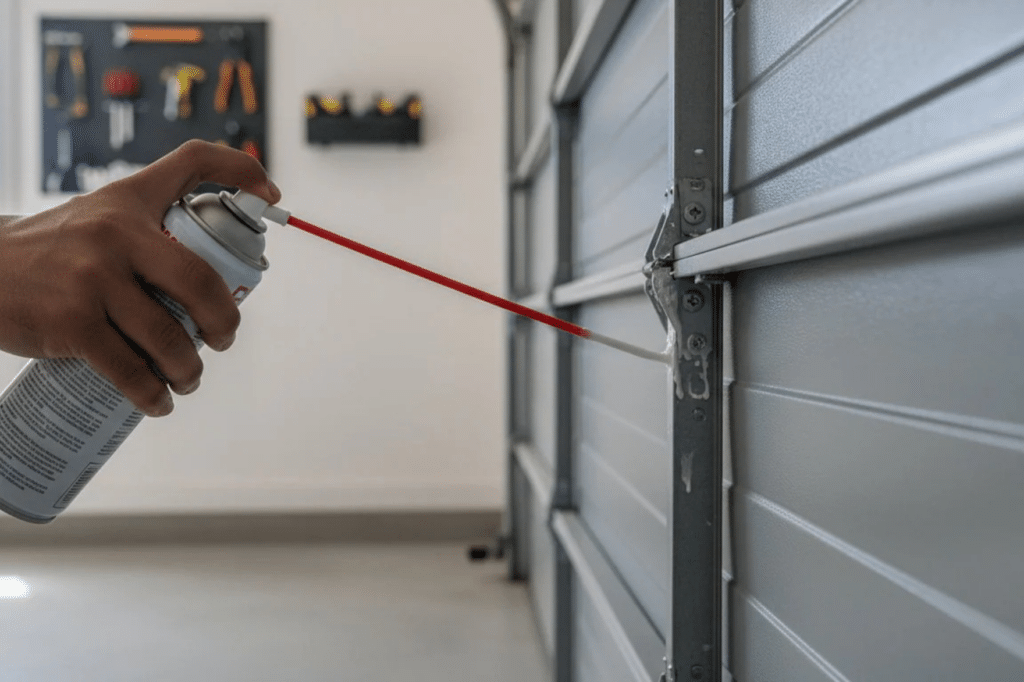
Not every grinding noise requires an immediate repair visit. If the problem is minor, there are a few maintenance tasks homeowners can safely perform.
Clean the Tracks
Dust, leaves, and small debris can collect inside the tracks, causing rollers to move unevenly.
Use a dry cloth or soft brush to remove dirt. Avoid using grease inside the tracks, as it attracts more debris.
Lubricate Moving Parts
Apply a silicone- or lithium-based garage door lubricant to:
- Rollers
- Hinges
- Bearings
- Springs (lightly)
- Pivot points
Wipe away excess lubricant to prevent buildup.
Tighten Loose Hardware
Garage doors move hundreds of times each year, which can gradually loosen nuts and bolts.
Inspect visible brackets and hinges, tightening only hardware that is easily accessible.
Safety Reminder: Never attempt to adjust torsion springs or lift cables. These parts are under extreme tension and should only be serviced by trained professionals.
Repairs You Should Never Attempt Yourself
Some garage door repairs carry serious safety risks.
Avoid attempting to repair:
- Torsion springs
- Extension springs
- Lift cables
- Bottom brackets
- Garage door opener motor internals
- Bent tracks requiring realignment
These components require specialized tools and expertise. A mistake can result in severe injury or extensive property damage.
What Does Garage Door Grinding Noise Repair Cost in Denver?

Repair costs depend on the underlying issue, the age of the system, and whether replacement parts are needed.
Problem | Typical Repair Complexity |
Lubrication and maintenance | Low |
Roller replacement | Low to Moderate |
Track adjustment | Moderate |
Bearing replacement | Moderate |
Moderate to High | |
Spring replacement | High (Professional only) |
Delaying repairs often increases costs because worn parts can damage surrounding components.
For example, ignoring worn rollers may eventually damage the tracks, hinges, and opener, turning a simple repair into a larger project.
Preventive Maintenance Tips for Denver Homeowners
Routine maintenance is the best way to keep your garage door operating quietly and reliably.
Monthly
- Listen for unusual noises.
- Check door balance visually.
- Inspect rollers and hinges.
Every Six Months
- Lubricate moving components.
- Tighten accessible hardware.
- Clean tracks thoroughly.
- Test the auto-reverse safety feature.
Annually
Schedule a professional inspection to:
- Evaluate spring tension
- Check opener performance
- Inspect cables
- Verify track alignment
- Replace worn components before they fail
Preventive maintenance is particularly valuable in Denver, where seasonal weather changes can accelerate wear on metal components.
Seasonal Garage Door Maintenance Checklist
Keeping your garage door in good condition throughout the year can prevent many common problems.
Spring
✔ Clean tracks after winter.
✔ Inspect weather seals.
✔ Lubricate moving parts.
Summer
✔ Check opener performance during hot weather.
✔ Tighten loose hardware.
✔ Inspect rollers for wear.
Fall
✔ Replace damaged weather stripping.
✔ Test door balance.
✔ Clean debris from tracks.
Winter
✔ Remove ice buildup near the bottom seal.
✔ Keep tracks clean and dry.
✔ Watch for slow or noisy operation during freezing temperatures.
When It’s Time to Replace Instead of Repair
Sometimes repeated repairs indicate that replacement is the more practical long-term solution.
Consider replacing your garage door if:
- It is more than 15–20 years old.
- Repairs are becoming frequent.
- The opener is outdated.
- Multiple major components have failed.
- The door no longer operates safely.
- Energy efficiency has become a concern.
A newer garage door can improve curb appeal, enhance security, reduce noise, and increase your home’s value.
Why Choose Society Garage Door Repair?
When your garage door starts making unusual noises, choosing an experienced local company makes all the difference.
At Society Garage Door Repair, we provide dependable garage door services for homeowners throughout Denver. Our technicians are trained to diagnose grinding noises accurately and recommend the most cost-effective solution—whether it’s a simple adjustment, replacing worn components, or repairing your garage door opener.
We focus on:
- Accurate diagnostics
- High-quality replacement parts
- Honest recommendations
- Prompt service
- Long-lasting repairs
- Customer satisfaction
Our goal is to restore your garage door’s safe, quiet operation as quickly as possible.
Key Takeaways
- A grinding noise during closing usually points to worn rollers, dry moving parts, track misalignment, or opener issues.
- Denver’s changing weather can speed up wear on garage door components.
- Regular lubrication and inspections help prevent expensive repairs.
- Avoid working on springs, cables, or other high-tension components yourself.
- Early diagnosis can prevent small issues from becoming major repairs.
- Annual professional maintenance helps extend the life of your garage door system.
FAQs
Grinding noises during closing are commonly caused by worn rollers, dry hinges, misaligned tracks, damaged bearings, or issues with the garage door opener.
Grinding noises during closing are commonly caused by worn rollers, dry hinges, misaligned tracks, damaged bearings, or issues with the garage door opener.
Yes. You can safely lubricate rollers, hinges, bearings, and pivot points using a garage door lubricant. Avoid lubricating the tracks or attempting repairs on springs.
Yes. Temperature fluctuations, snow, moisture, and dust can accelerate wear on rollers, tracks, springs, and other moving components.
A professional inspection is recommended at least once a year, with lubrication and basic maintenance every six months.
If your garage door is over 15–20 years old, requires frequent repairs, or has multiple failing components, replacement may be the better long-term investment.
Conclusion
A grinding noise shouldn’t be ignored. Whether it’s caused by worn rollers, misaligned tracks, or an aging opener, addressing the issue early can save you money, improve safety, and prevent unexpected breakdowns.
If your garage door in Denver is making grinding noises only when closing, don’t wait until the problem becomes more serious. A professional inspection can identify the exact cause and restore smooth, quiet performance before additional damage occurs.
Contact Society Garage Door Repair Today
If your garage door is making unusual noises or isn’t operating as it should, Society Garage Door Repair is here to help. Our experienced technicians proudly serve homeowners throughout Denver with reliable inspections, repairs, maintenance, and garage door opener services.
Call today to schedule your garage door inspection and enjoy safe, quiet, and dependable operation once again.